
September 12, 2024
The Ultimate Guide to Deck Installation: Tips for Creating Your Dream Outdoor Space
A beautifully crafted deck can transform your backyard into an inviting outdoor living area, perfect for relaxing, entertaining, and enjoying the great outdoors. Whether you envision a cozy space for morning coffee or a sprawling platform for summer barbecues, installing a deck is a fantastic way to enhance your home’s appeal and functionality. However, building a deck involves more than just laying down boards; careful planning and execution are key to creating a safe, durable, and aesthetically pleasing structure. Here’s your ultimate guide to deck installation, covering everything from planning to finishing touches.
1. Planning Your Deck: Purpose, Size, and Location
Before you start building, it’s important to consider the purpose, size, and location of your deck. Will it be used primarily for dining, lounging, or as a play area for kids? Understanding its main function will help you determine the layout and features.
- Size: The size of your deck should complement your outdoor space without overwhelming it. Consider how much seating you need and if you plan to include elements like a grill, hot tub, or fire pit.
- Location: Ideally, your deck should be accessible from your home’s main living areas, such as the kitchen or living room. Consider factors like sun exposure, privacy, and views when selecting the location.
2. Choosing Materials: Wood, Composite, or PVC?
The choice of materials greatly impacts the look, feel, and maintenance of your deck. Here are the most popular options:
- Wood: Natural wood, such as cedar, redwood, or pressure-treated pine, is a classic choice that offers a warm, traditional look. While it requires regular maintenance like staining and sealing, its natural beauty is unmatched.
- Composite: Made from a mix of wood fibers and recycled plastics, composite decking offers the appearance of wood without the maintenance. It’s durable, resistant to rot and insects, and available in a variety of colors and textures.
- PVC (Vinyl): PVC decking is completely synthetic, providing a low-maintenance option that’s resistant to stains, scratches, and fading. It’s an excellent choice for homeowners looking for a sleek, modern deck that can withstand harsh weather.
3. Deck Design: Railings, Stairs, and Additional Features
Your deck design should not only be functional but also enhance the aesthetics of your home. Railings, stairs, and other features play a big role in the overall look and safety of your deck.
- Railings: Railings are essential for safety, especially on elevated decks. Choose from materials like wood, metal, glass, or cable for a look that complements your home’s style.
- Stairs: If your deck is elevated, stairs are necessary for access. Position stairs thoughtfully to connect your deck seamlessly to the rest of your yard.
- Additional Features: Incorporate built-in benches, planters, pergolas, or lighting to elevate the functionality and appearance of your deck. Consider adding shade structures like umbrellas or retractable awnings for comfort during hot days.
4. Preparing the Site: Permits and Foundations
Before construction begins, you’ll need to prepare the site and ensure you have the necessary permits.
- Permits: Most local governments require a permit for deck construction to ensure the structure meets building codes. Check with your local building authority to understand the requirements.
- Foundations: Proper deck foundations are crucial for stability and longevity. Most decks are supported by concrete footings that anchor the posts securely to the ground, preventing movement or sinking over time.
5. Building the Deck: Key Steps in the Construction Process
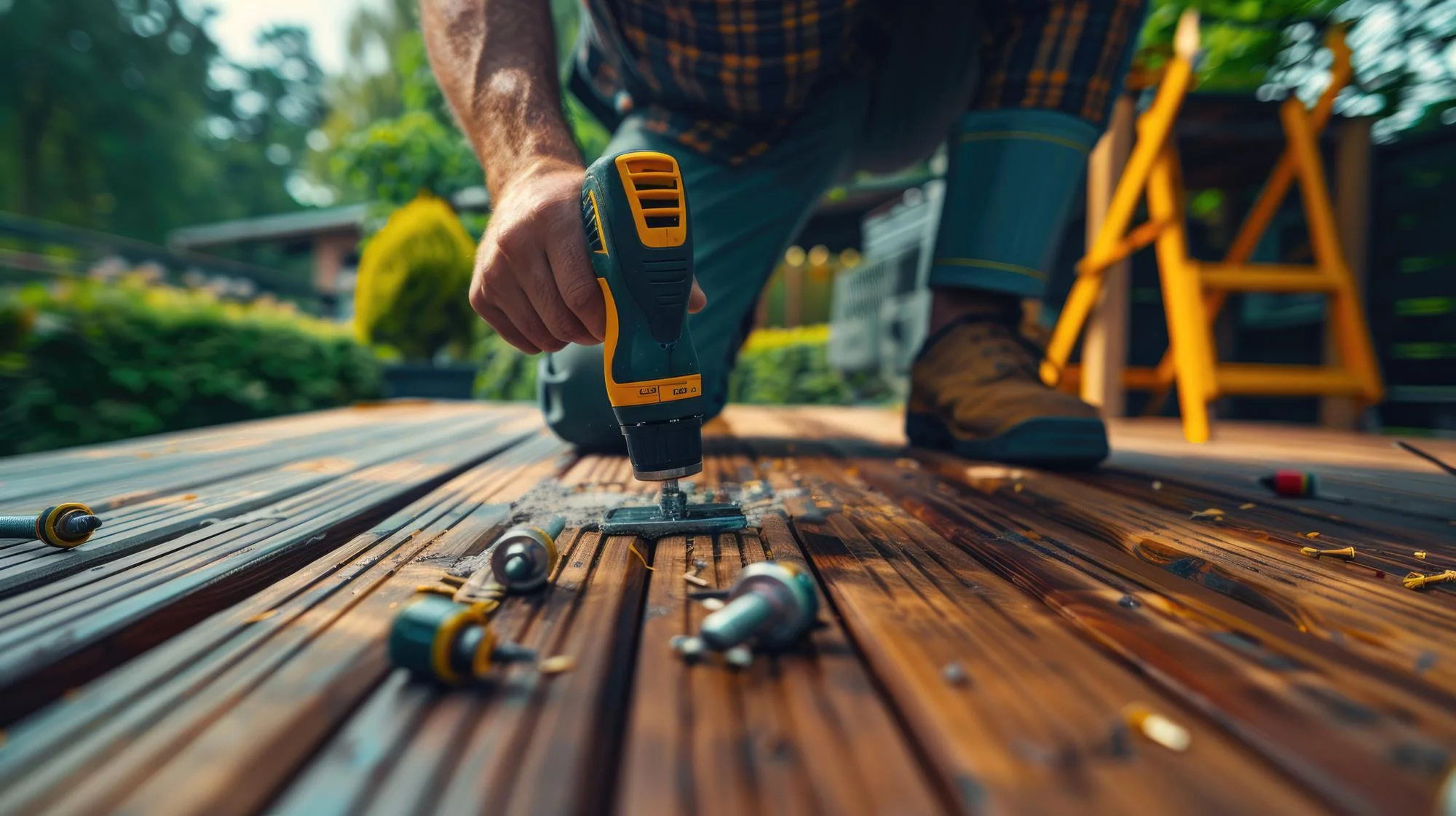
Building a deck involves several steps, including framing, decking, and finishing. While DIY enthusiasts may tackle smaller projects, larger or elevated decks are best left to professionals.
- Framing: The frame is the backbone of your deck, consisting of beams and joists that provide structural support. Precise measurements and secure connections are essential at this stage.
- Decking: Once the frame is in place, the decking boards are installed. These boards can be laid in various patterns, such as horizontal, diagonal, or herringbone, to add visual interest.
- Finishing: Finishing touches like railings, stairs, and trim complete the look of your deck. Sealing or staining wood decks is necessary to protect them from weather and wear.
6. Maintenance: Keeping Your Deck in Top Condition
To ensure your deck remains safe and attractive, regular maintenance is key.
- Wood Decks: Clean your deck annually to remove dirt, mildew, and debris. Stain or seal every 2-3 years to protect the wood from moisture and UV damage.
- Composite and PVC Decks: These materials require less maintenance but should still be cleaned regularly to prevent staining and keep them looking their best.
Installing a deck is a fantastic way to extend your living space and enhance your home’s value. With careful planning, the right materials, and professional installation, you can create a beautiful, functional deck that you’ll enjoy for years to come. Whether you’re envisioning a cozy nook for family gatherings or a stylish space for outdoor entertaining, a well-designed deck is the perfect addition to any home.