September 12, 2024
Deck Repair: How to Restore and Revitalize Your Outdoor Space
A deck is more than just an extension of your home—it’s a place to relax, entertain, and enjoy the outdoors. However, like any outdoor structure, decks are exposed to the elements and can deteriorate over time. Whether it’s splintering boards, loose railings, or weather damage, regular maintenance and timely repairs are essential to keep your deck safe and looking great. Here’s a guide to deck repair, covering common issues, repair tips, and how to restore your deck to its former glory.
1. Common Deck Problems: Identifying Issues Early
Decks can develop a range of issues, especially if they haven’t been maintained regularly. Identifying these problems early can prevent more extensive (and expensive) repairs down the line.
- Rotting Wood: Rot is one of the most common problems, particularly in older wooden decks. Moisture can seep into the wood, causing it to decay. Look for soft spots, discoloration, or a musty smell—signs that wood rot might be present.
- Loose or Broken Boards: Over time, deck boards can warp, crack, or come loose. These can be hazardous, creating tripping hazards or weak points in the deck structure.
- Wobbly Railings: Railings provide essential safety, especially on elevated decks. Loose or unstable railings can pose a serious risk, particularly if children or pets use the deck frequently.
- Rusty Nails and Hardware: Rusty nails, screws, or metal connectors can weaken the deck’s integrity. Check for corroded hardware, especially in areas exposed to moisture.
- Faded or Peeling Finish: Weather exposure can cause the stain or paint on your deck to fade or peel, making it look aged and less appealing. A worn finish also leaves the wood vulnerable to further damage.
2. Deck Repair Steps: Bringing Your Deck Back to Life
Once you’ve identified the issues, it’s time to start the repair process. Here are the key steps to follow:
- Inspect and Assess: Begin with a thorough inspection of your deck, checking every board, post, and railing for signs of damage. Take note of areas that need attention and prioritize safety-related repairs first.
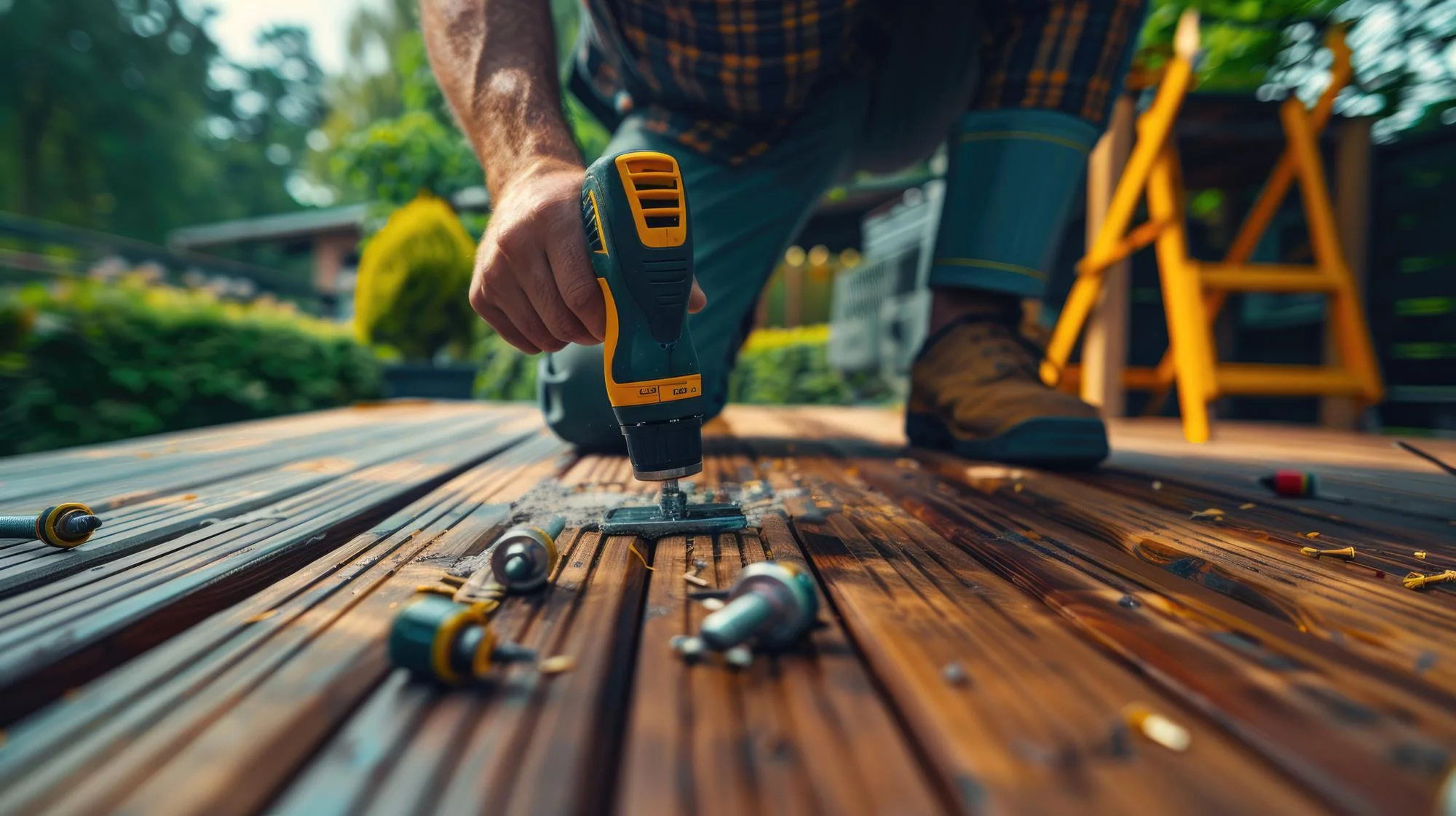
- Replace Damaged Boards: Remove any rotting, cracked, or broken boards and replace them with new ones. For wooden decks, use pressure-treated lumber to ensure longevity. Make sure the new boards are securely fastened with galvanized or stainless steel screws to prevent future rusting.
- Tighten or Replace Hardware: Tighten any loose screws or nails, and replace any corroded hardware with new, weather-resistant materials. Consider using deck clips or hidden fasteners for a cleaner look and added stability.
- Fix Wobbly Railings: Secure loose railings by tightening bolts and screws. If the railing posts are damaged or rotting, replace them entirely to ensure the safety of your deck.
- Sand and Clean: Sand down rough areas, splinters, or peeling finish to smooth the surface. Clean the entire deck with a deck cleaner to remove dirt, mildew, and old stains, preparing it for a fresh finish.
- Stain or Seal: Once repairs are complete, protect your deck by applying a stain or sealant. This not only enhances the appearance but also protects the wood from moisture, UV rays, and general wear and tear. Choose a product designed specifically for decks, and reapply every few years to maintain protection.
3. Preventive Maintenance: Keep Your Deck in Great Shape
Regular maintenance is the best way to extend the life of your deck and prevent the need for extensive repairs in the future. Here’s how to keep your deck looking and performing its best:
- Clean Regularly: Sweep your deck frequently to remove leaves, dirt, and debris that can trap moisture and promote decay. Power wash annually to deep clean the surface, removing mold and grime.
- Inspect for Damage: Perform regular inspections, especially after harsh weather. Check for loose boards, nails sticking out, and any signs of rot or damage.
- Seal and Stain: Reapply sealant or stain every 2-3 years, or as needed, depending on your deck’s exposure to sun and moisture. This will protect the wood from the elements and keep it looking fresh.
- Trim Surrounding Plants: Keep plants and shrubs trimmed away from your deck. Overgrown greenery can trap moisture against the wood, leading to mold and rot.
When to Call a Professional
While many minor repairs can be handled by homeowners, some issues require professional intervention, especially if your deck’s structural integrity is compromised. If you notice extensive rot, severe foundation issues, or if your deck feels unstable, it’s best to consult a professional deck repair service. They can assess the damage and provide expert repairs to ensure your deck is safe and sturdy.
Deck repair is an essential part of maintaining your outdoor space, ensuring it remains a safe, beautiful, and enjoyable area for years to come. By addressing problems promptly and performing regular maintenance, you can protect your investment and continue to enjoy your deck season after season. Whether you’re fixing loose boards or giving your deck a complete facelift, the right approach to deck repair can revitalize your space and extend its lifespan significantly.